
The Powerful Connection Between Sleep and Brain Health
When people think about improving their health, they often focus on diet, exercise, or supplements. But one of the most powerful tools for supporting the brain is something many people overlook: sleep. If fatigue, brain fog, headaches, or restless nights are affecting your day, it can be hard to know where to start.
The connection between sleep and brain health is stronger than many people realize. Sleep is not simply a time for rest. It is an active period of restoration that supports memory, mood, concentration, and long-term cognitive function. Healthy sleep habits do not replace medical care, but ongoing or worsening symptoms deserve attention.
While you sleep, your brain sorts information from the day and gets ready for the next one. Regular, restful sleep also gives your body and nervous system time to recover.
Sleep is one part of overall neurological wellness. It can work alongside medical care, movement, balanced nutrition, and other healthy habits.
Why Sleep and Brain Health Are Closely Connected
During sleep, the brain works to strengthen memory, support concentration, and maintain healthy communication between neurons. Deep sleep is especially important because it helps drive neurological repair and recovery.
Poor sleep over time can contribute to:
- Brain fog
- Difficulty concentrating
- Memory issues
- Increased stress and anxiety
- Headaches
- Fatigue
- Reduced cognitive performance
Sleep is one of the body’s most important recovery periods. During deeper stages of sleep, the brain appears to support waste-clearance activity, restore communication pathways, and assist cellular healing processes tied to neurological repair.
Researchers are still learning exactly how sleep affects the brain. What is clear is that sleep is not just “switching off.” It is part of the body’s regular rest and recovery cycle.
For patients living with neurological conditions such as migraines, epilepsy, Parkinson’s disease, or multiple sclerosis, poor sleep may worsen symptoms and impact daily quality of life.
How Sleep Affects Memory, Focus, and Mood
Sleep helps the brain organize information, stay alert, and manage emotions. After a poor night’s sleep, it may be harder to remember a name, follow a conversation, make decisions, or stay focused.
Poor sleep can also make stress feel heavier. At the same time, stress and anxiety can make it harder to fall asleep or stay asleep. This cycle is common, and it is worth discussing if it keeps happening.
Sleep problems do not always mean there is a neurological disorder. Memory changes, brain fog, headaches, and fatigue can have many causes. If symptoms are new, ongoing, or getting worse, a medical professional can help look at the full picture.
When Sleep Problems Affect Daily Life
An occasional restless night is normal. It may be time to ask for help when poor sleep regularly affects your work, relationships, mood, memory, or ability to stay alert.
Sleep can also matter more for people already living with a neurological condition. For some patients, poor sleep may make fatigue, headaches, concentration problems, or other symptoms feel harder to manage.
Because every patient is different, sleep concerns should be considered alongside overall health, medications, and symptoms. Atlanta Neuroscience Institute’s neurologists can help determine whether a neurological evaluation may be appropriate.
Simple Ways to Encourage Better Sleep
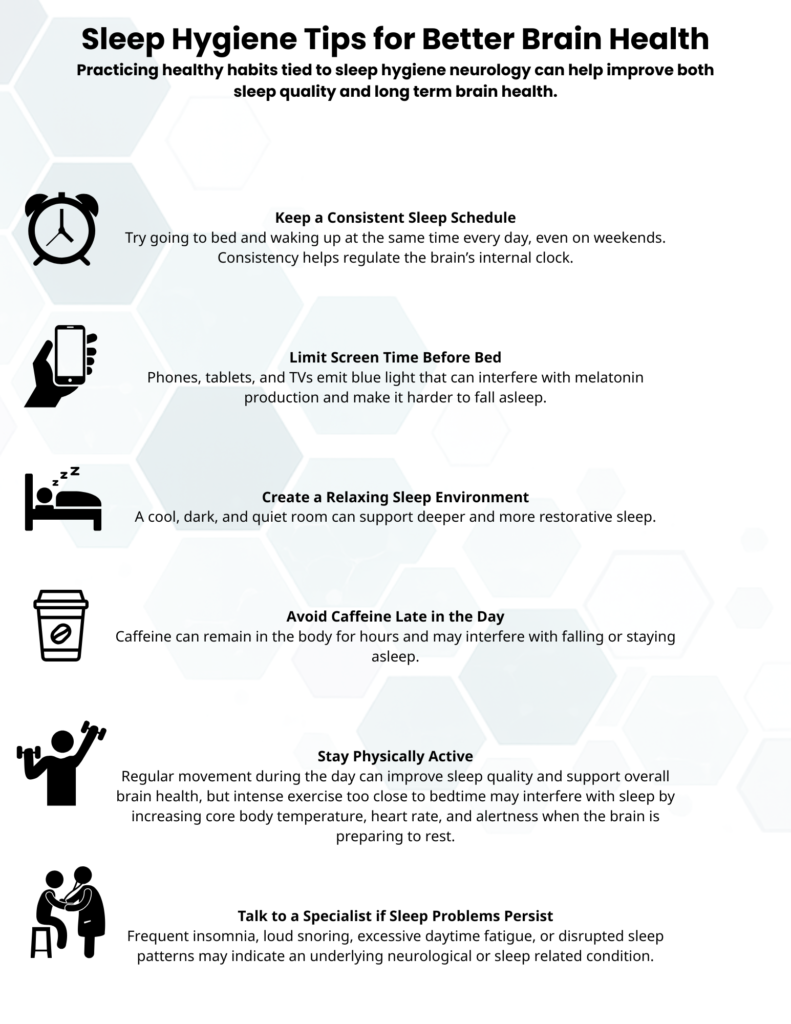
Small, steady habits can make restful sleep easier. Try keeping a regular bedtime and wake time, creating a calm evening routine, and making your bedroom quiet, dark, and comfortable.
It may also help to limit bright screens, stressful work, or stimulating conversations close to bedtime. Regular movement during the day can also be helpful, depending on your health and mobility.
If sleep problems continue despite healthy habits, you are not doing anything wrong. Ongoing insomnia, strong daytime sleepiness, unusual nighttime behavior, or neurological symptoms may deserve further evaluation.
When Should You Talk to a Neurologist?
Not every sleep problem requires neurological care. A neurologist may be helpful when sleep concerns happen with memory changes, headaches, seizures, movement changes, balance problems, numbness, or other nervous system symptoms.
A neurologist can review your symptoms, medical history, medications, and overall health to decide whether testing or treatment may be needed.
If you are unsure where to begin, learning more about neurology care at Atlanta Neuroscience Institute can help you understand the services available.
Sleep Is One Part of Protecting Your Brain
Good brain health depends on many factors, and sleep is one important piece. Restful sleep can help with memory, attention, mood, energy, and daily function.
It can also help you notice when something else may be affecting your health. For people with neurological conditions, talking about sleep during routine care may provide helpful information about symptoms and quality of life.
Concerned About Sleep or Neurological Symptoms?
Quality sleep plays an important role in cognitive function, memory, and overall neurological health. If you are experiencing ongoing fatigue, headaches, brain fog, or other neurological symptoms, the specialists at Atlanta Neuroscience Institute are here to help you understand what may be contributing to your symptoms and what next steps may make sense.
Written by Josh Mann |
Medically Reviewed by Lawrence G. Seiden, MD, Board Certified Neurologist at Atlanta Neuroscience Institute
Reviewed on May 28, 2026